

Dhamma research : ค้นหาหนังสือธรรมะ หน้า 6 / 7
หน้าหนังสือทั้งหมด

40
Analysis of Milindapañha Recensions
MIZUNO, K.
1959 “On the Recensions of Milindapañha” in Komazawa Daigaku kenkyu kiyo, (Summary of the Research Studies of University of Komazawa]), 17-55. Chinese Translation: 關於《彌蘭陀王問經》類, 水野弘元《佛教文獻
This text discusses the various recensions of the Milindapañha across multiple translations. Key contributions include K. Mizuno's analysis in 1959 published in the Komazawa Daigaku kenkyu kiyo, along
72
Research on the Ekottarika-àgama
HIROAKA, Satoshi (平岡聪).
2013 "The School Affiliation of the Ekottarika-àgama."
Research on the Ekottarika-àgama (Taishō 125). edited by Dhammadinnā. 71-105. Taiwan: Dharma Drum Publishing Corporation
This text consists of scholarly contributions regarding the Ekottarika-àgama, a significant Buddhist scripture. Hiroaka discusses the school affiliations of this text, while Kuan highlights key Mahaya

5
Experience Inner Peace at The Middle Way Meditation Village
…01) 619-8708. (09) 109-9219, (053) 404-220 up to 1
or visit www.meditationthai.org
Organized by the Dhamma Research for Environment Foundation.
A non-profit organization that promotes world peace through inner peace…
…more information, please contact (01) 619-8708 or (09) 109-9219, or (053) 404-220. Organized by the Dhamma Research for Environment Foundation, we aim to promote world peace through inner peace.
19
Exploring Ancient Thai Meditation Manuscripts and Their Influence
of the original content of the palm-leaf manuscript is provided along with a translation into modern Thai and English. It consists of a correlation of body parts with the sublime attributes of the enl
This content discusses the significance of ancient Thai palm-leaf manuscripts, especially those of the bŏran kammaṭṭhān type, which correlate body parts with Buddha's attributes and suggest daily rec
84
Bibliography of Buddhist Studies
Bibliography
Dutt, Nalinaksha. Mahayana Buddhism. Delhi: Motilal Banarsidass, 1978.
Geiger, Wilhelm. “Dhamma and Brahman.” Zeitschrift flour buddhismus (1921): 73-83.
Gombrich, Richard. “The Buddha’s
This bibliography encompasses significant scholarly works in Buddhist studies, offering insights into various aspects such as the early Buddhist philosophy, the concept of Dharmakāya, and teachings of
39
Luang Por Dhammajayo's Global Impact
and the United States.
• Collaborating with, and giving support to, Buddhist organizations throughout the world. Facilitated ordination and training programs for monks and novices in Nepal, Indonesia,
Luang Por Dhammajayo has significantly contributed to Buddhist organizations worldwide, facilitating ordination and training for monks in several countries. He established research programs for script
37
Untitled
saffron robes, he was a monk in his early fifties.
His forehead showed determination, intelligence
and uncommon strength of character. His glare was
penetrating and yet compassionate—his presence
reso
N/A
76
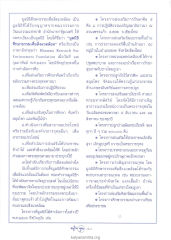
มูลนิธิศึกษาธรรมเพื่อสิ่งแวดล้อม
…
จดทะเบียนเป็นมูลนิธิ โดยให้ชื่อว่า “มูลนิธิ
ศึกษาธรรมเพื่อสิ่งแวดล้อม” หรือเรียกเป็น
ภาษาอังกฤษว่า Dhamma Research For
Environment Foundation เมื่อวันที่ ๑๗
กุมภาพันธ์ พ.ศ.๒๕๓๖ โดยมีวัตถุประสงค์ใน
การดำเนินการคือ
๑…
… จดทะเบียนเป็นมูลนิธิ โดยให้ชื่อว่า “มูลนิธิ ศึกษาธรรมเพื่อสิ่งแวดล้อม” หรือเรียกเป็น ภาษาอังกฤษว่า Dhamma Research For Environment Foundation เมื่อวันที่ ๑๗ กุมภาพันธ์ พ.ศ.๒๕๓๖ โดยมีวัตถุประสงค์ใน การดำเนินการคือ ๑…
24
Dhamma for Laypersons and the Four Levels of Beauty
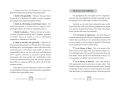
A person who has the Dhamma for Laypersons
(Gharāvās-dhamma) must display four regular habits:
1. Habit of Responsibility – Whatever the task at hand, he must do it to the best of his ability, in t
A person who follows the Dhamma for Laypersons exhibits four habits: responsibility, self-training, endurance, and sacrifice. These traits ensure self-reliance and leadership within families. In marri
140
The Gift of Dhamma: An Appreciation
“Sabba danam dhamma danam jinati”
“The gift of Dhamma excels all other gifts”
As director of the Dhammachai International Research Institute of Australia and New Zealand (DIRI), I would like to expre
In this message, Phrakrupladnayokwarawat (SudhammoBhikkhu) expresses gratitude to Rungsilp Printing Co., Ltd. for their support in publishing the DIRI journal. This publication aims to benefit student

24
Monastic vs Secular Life: Insights on Dhamma
Monastic v.s Secular Life
Monica
had abundant wealth, dignity, power, and servants.
Finally, he renounced the world and sought to ordain
since he realized that a family life does not encourage
the Dha
In this discussion, the speaker reflects on the differences between monastic and secular lifestyles, emphasizing the pursuit of Dhamma as the true source of happiness, in contrast to material possessi
25
Monastic vs Secular Life in Buddhism
Monastic v.s Secular Life
Monica
Luang Por
although he had abundant wealth, dignity, power, and
servants. Finally, he renounced the world and sought
to ordain since he realized that a family life does
This text discusses the differences between monastic and secular life through the eyes of a Buddhist perspective. It highlights how a renunciation of material wealth and societal status opens the path
121
Truth for the Family: Lessons from the Buddha
Part Five: Truth for the Family
2. Ideally, he/she should be extremely intelligent,
exceptionally virtuous, exceedingly knowledgeable
of the truths about life (be enlightened), and all
his knowledge m
In this passage, we delve into the qualities of an ideal mentor and the essence of the Buddha's teachings. The ideal mentor is someone who is not only intelligent and virtuous but also knowledgeable f

100
The Impact of Dhamma Quiz on Personal and National Development
In my opinion, the Dhamma quiz is the activity that should have a lot of support because it is one way to develop the country indirectly. Before the quiz, participants have to read the book. Usually m
The Dhamma quiz serves as a crucial activity for personal and national development by encouraging reading and understanding of fundamental Dhamma principles. Participants engage with important texts,
49
Venerable Dhammajayo and his Contributions to World Peace
has also received an Honorary Doctorate Degree in Buddhist Studies from the Maha Chulalongkorn Raja Vidhayalai University.
He was the first Thai Buddhist monk to receive the Mahatma Gandhi Peace Awar
Venerable Dhammajayo has received multiple accolades for his dedication to promoting world peace through inner peace and meditation. As the first Thai Buddhist monk to receive the Mahatma Gandhi Peace
12
Dhamma for Laypersons: Building a Stable Family
Although the solution is not simple, that does not mean there is no path to correct and prevent them from occurring. If each person realizes what the heart of the family is and everyone takes the best
The solution to family dilemmas is found in understanding the heart of the family and the teachings of the Buddha. Dhamma for Laypersons comprises four core principles: truthfulness, self-control, end
34
Understanding Dhammakāya in Early Buddhist Thought
II. The Different Approach
A fairly established academic understanding has settled regarding the term dhammakāya in the Pali canon, that it was used merely in the sense of the ‘Buddha’s teachings.’ In
The term 'dhammakāya' in the Pali canon is understood as representing the Buddha's teachings. It is established through several canonical passages that equate the Buddha with dhamma. Notable reference
55
Implications of Dhamma and Brahma in Buddhist Teachings
While a conclusion is proposed here to some extent, it may be useful to examine further implications from the parallel usage of the term 'dhamma' and 'brahma' elsewhere, for it may add further underst
เนื้อหานี้สำรวจการใช้คำว่า 'ดัมมะ' และ 'บราเหมะ' ในวรรณกรรมพุทธศาสนา และการตีความความหมายที่เชื่อมโยงกันของทั้งสองคำ เป็นการศึกษาความสำคัญของการใช้คำที่ขนานกัน ซึ่งสะท้อนถึงสถานะความบริสุทธิ์สูงสุดที่
60
Understanding Dhammakāya: The Essence of Transcendental Dhamma
Arhatship (arahattamagga).86 Therefore, the particular path is not a mere ‘collective title’ of the path-constituents but the ‘essential totality’ by which a ‘body’ is defined.
The dependence of funct
This text discusses the concept of Arhatship and the definition of Dhammakāya in the context of Buddhist philosophy. It argues that the path should be seen as an essential totality, forming a 'body,'
97
Preservation of Palm-Leaf Scriptures in Dai Buddhism
donate palm-leaf scriptures as an act of merit and such donations
appear less frequently in the sacred dantam (贽坦) or offering
ceremony. Donors prefer to donate Buddhist scriptures printed
using mod
This text discusses the decline in donations of traditional palm-leaf scriptures in favor of more accessible and readable texts printed on Chinese and sa-paper. Reasons include cost, legibility, and t